About Sodium Chloride
Sodium Chloride
We are manufacturing Sodium Chloride in Technical, Pure & LR Grade.
These Products are available in 50 kgs Bag/Drum.
Sodium chloride is an ionic compound found in various foods and medical treatments. More commonly referred to as salt or table salt, sodium chloride is used as a seasoning in many foods.
Medically, sodium chloride solutions are used in catheter flush injections or intravenous infusions, and for cleaning objects such as contact lenses in the form of saline. Sodium chloride inhalation can remove certain bacteria in body secretions.

Technical Details
Product Name : Sodium Chloride
CAS No. 7647-14-5
Properties
| Specifications | Sodium Chloride |
Assay | 99% |
pH Value | 7 |
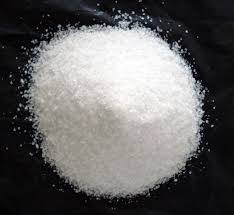
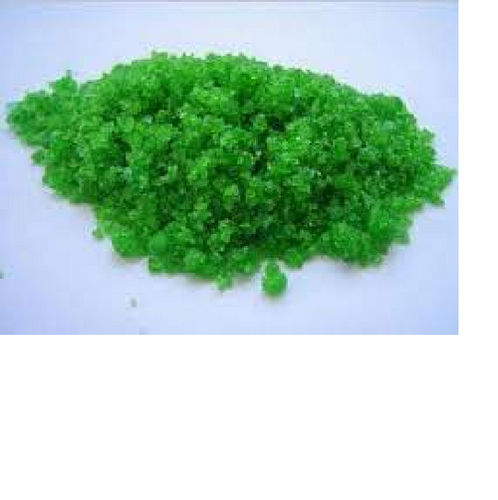
Appearance | Colorless Crystals |
Mol. Formula | NaCI |
Density | 2.165 g/cm3 |
Molar mass | 58.44 g mol |
Melting Point | 801 C (1,474 F; 1,074 K) |
Boiling Point | 1,413 C (2,575 F; 1,686 K) |
Solubility in water | 359 g/L |
Odor | Odorless |
Solubility in Ammonia | 21.5 g/L |
Sodium Chloride offers exceptional purity, non-caking properties, and minimal insoluble matter (<0.1%). Its fine powder or crystal granules are free from visible contamination, heavy metals, and iron, ensuring suitability for food, industrial, and pharmaceutical use. With a shelf life of five years, it maintains stability under proper storage conditions.
Versatile Applications Across IndustriesUsed extensively in chemical processing, water treatment, and pharmaceuticals, Sodium Chloride also serves as an essential food additive and de-icing agent. Its stability, neutrality in pH, and non-toxic nature allow effortless integration into manufacturing, distribution, and daily operations.
FAQs of Sodium Chloride:
Q: How should Sodium Chloride be stored to maintain its quality?
A: Sodium Chloride should be kept in a sealed container in a cool, dry place to preserve its purity and prevent clumping or contamination. Proper storage ensures its five-year shelf life and maintains its non-caking properties.
Q: What are the typical uses of Sodium Chloride in different industries?
A: Sodium Chloride is used as a raw material in chemical manufacturing, an agent for water treatment, a preservative and additive in food industries, a de-icing compound, and in pharmaceutical formulations for saline solutions and medical-grade products.
Q: When is Sodium Chloride considered non-hazardous and safe for handling?
A: With a minimum purity of 99% and absence of hazardous contaminants, Sodium Chloride is classified as non-hazardous and non-toxic, provided standard handling protocols are followed during industrial, food, and pharmaceutical application.
Q: Where is Sodium Chloride commonly sourced and packed?
A: Sodium Chloride is processed, packed, and supplied by manufacturers, distributors, and exporterscommonly in India. It is available in HDPE bags of 25 kg or 50 kg, or tailored packaging as per buyer requirements.
Q: What process is involved in ensuring the high purity of Sodium Chloride?
A: The purification process includes removing insoluble matter and contaminants such as heavy metals and iron, followed by crystallization. Final product testing ensures compliance with industrial, food, or pharmaceutical grade standards.
Q: How does the use of Sodium Chloride benefit water treatment and food preservation?
A: In water treatment, Sodium Chloride helps soften water by removing calcium and magnesium ions. As a food preservative, its saline nature inhibits microbial growth, extending shelf life and improving food safety.
Q: What forms of Sodium Chloride are available for purchase?
A: Sodium Chloride is available as fine powder or crystalline granules, depending on application requirements. The physical form ensures versatility for users in industrial processes, food products, and laboratory uses.







 Send Inquiry


 Send Inquiry